
Control: Clearing the Questions

At last Polaris leads Jesse to Hedron, the source of the Hedron Resonance Amplifiers. It tells Jesse to tear off the HRA protecting Hedron from the Hiss. When Jesse enters the vast room, it immediately fills with Hiss. I was really confused from this point on. What is Jesse trying to achieve? Hedron is contained in a vast metal sphere with the Hiss buzzing about. Jesse moves from turret to turret (which coincidentally happen to be placed around the room), firing red lasers. It seems as if she is aiming at the Hiss. Despite her best effort, the Hedron container breaks. Was that her goal? Or were the lasers supposed to defeat the Hiss? Jesse's reaction is one of failure.
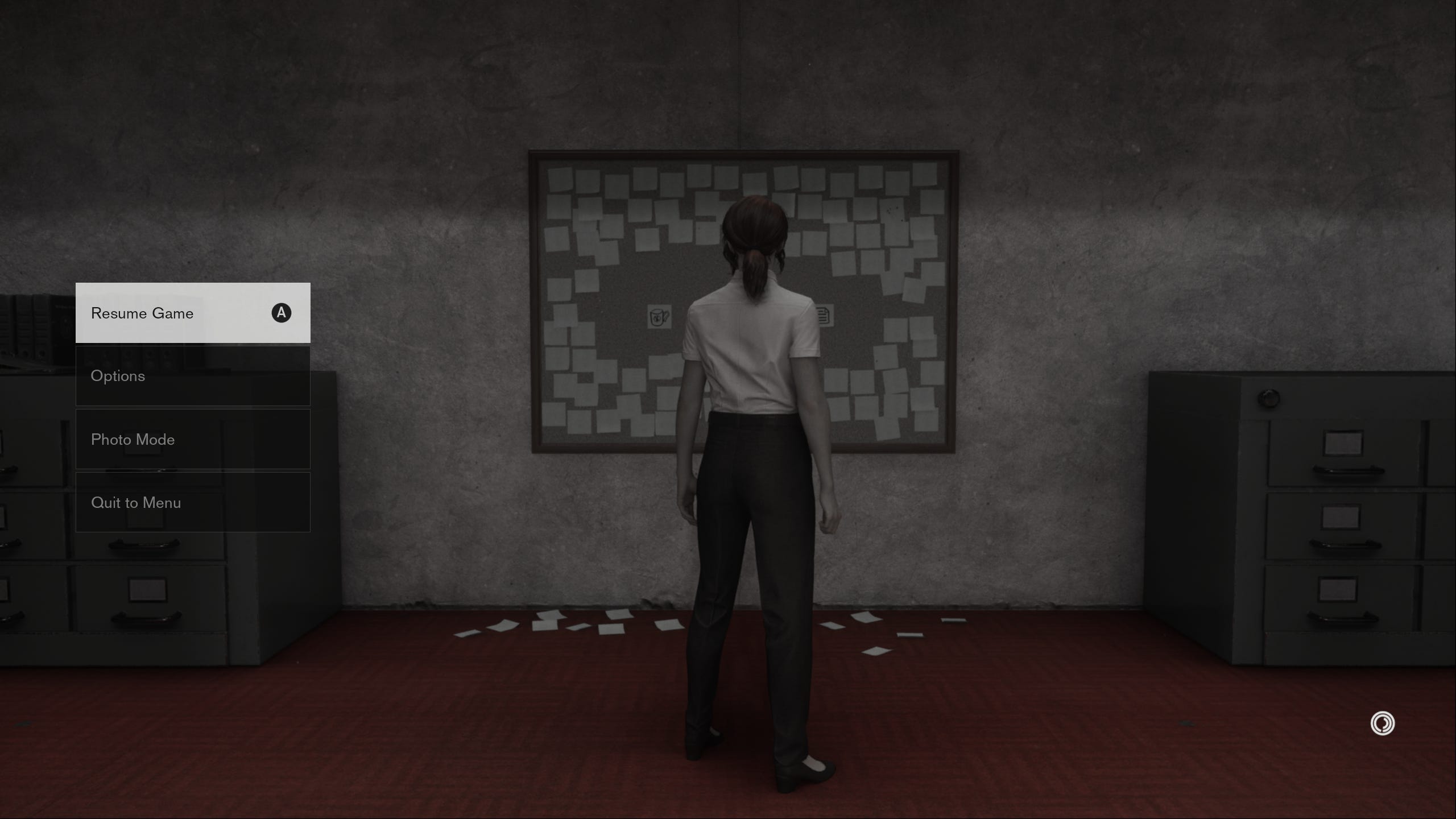
Obviously fake credits follow. Eventually Control restarts with Jesse as a menial worker at the FBC. After a few repetitive “puzzles” Jesse realizes she is trapped in her own mind. The Hiss have invaded her mind. Once she recognizes her situation she is able to resist and awaken. Her awakening grants her additional powers. With it she is able to cure her brother and prevent any further Hiss from entering our universe.
As Control ends Jesse is intent on destroying any remaining Hiss in the FBC. Completing other objectives, like the Jukebox, Side missions, or Board objectives don't unlock any additional plot. The developers of Control released two DLCs, the Foundation and AWE. When I started playing Control it was from a free version I had from the Epic Store, but only the base game. Only when I finished did I look at Steam and realize my mistake. I have a free Steam copy, with both DLCs! A friend reassured me that neither DLC addresses the unresolved issues of the conclusion.
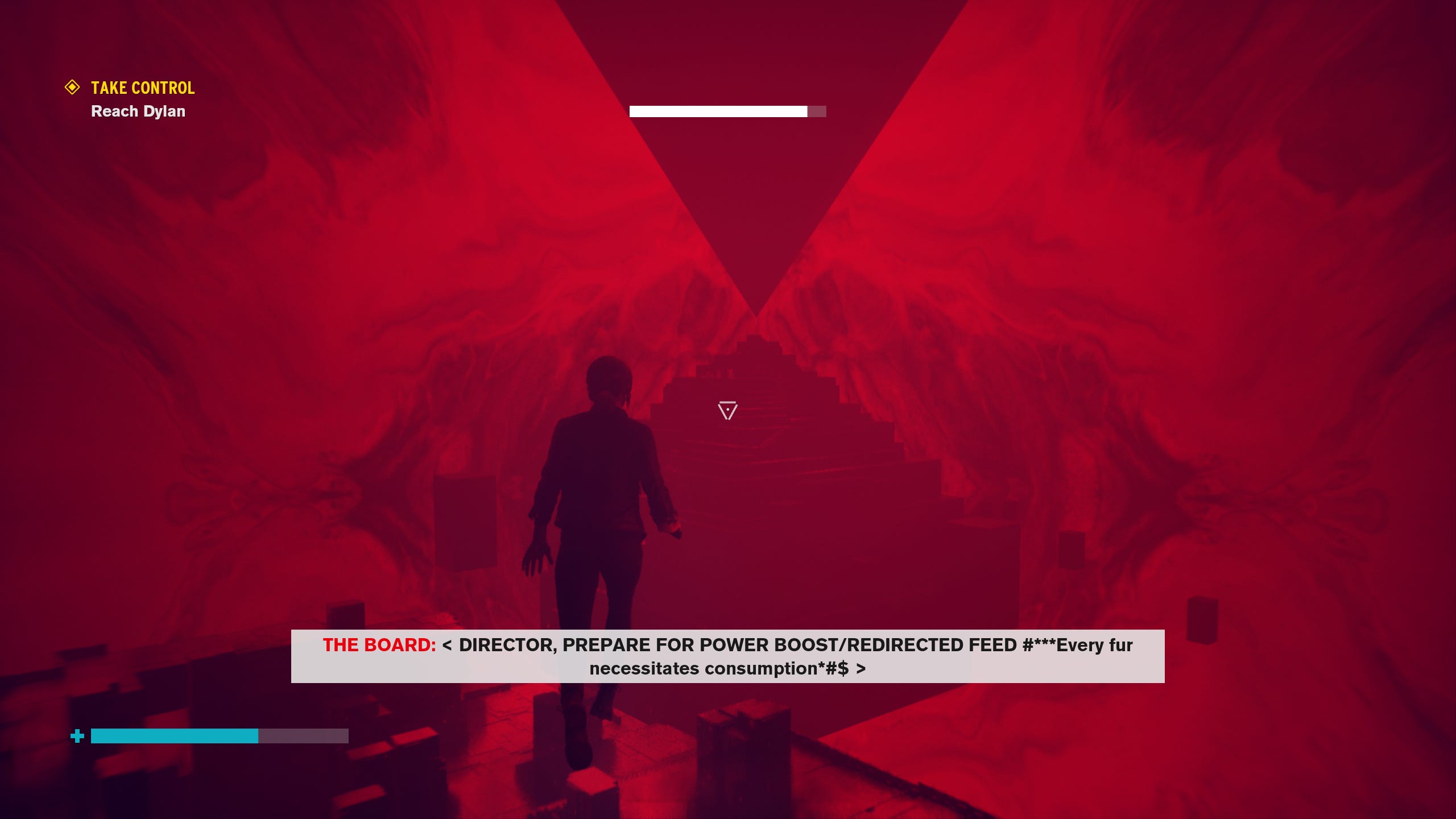
The final result; Dylan is free of the Hiss, but in a coma, the Hiss can't enter the FBC anymore, and Jesse is in charge of the FBC, but the Hiss aren't completely vanquished. The FBC remains in lockdown because remnants still roam free in the Oldest House. What are the Hiss? This question resonates with a similar question; what is Hedron? At best, they are both alien things that resonate. In Control's case, to resonate is a form of communication that cancels each other out. Why does Jesse free/kill Hedron? When Hedron dies/escapes, temporarily no one is protected by its resonance. When Jesse awakens she gains the ability to resonate to Hedron's frequency, protecting the FBC.
On Awkward Mixture I often question two topics. One is the use of allusions and references. Does the developer deploy them effectively? That's not an issue here. Control doesn't rely on citations to tell its story. Instead, it tries to craft a mystery with ambiguity. On both of these elements it doesn't succeed. It tries to craft a narrative of increasing tension through mystery. Unfortunately the payoff lacks a clear and satisfying ending. Then there is ambiguity. The Hiss aren't ambiguous, nor are they clearly explained. Instead, they lack detail, the worst outcome. The player is deprived of information. Either the developer doesn't know the answer, or they are reserving the information for Control 2. Hedron/Polaris is also a case of a lack of clarity. It'ss unclear why Jesse chooses to defeat/free Hedron, instead of letting it remain.
In Conclusion,
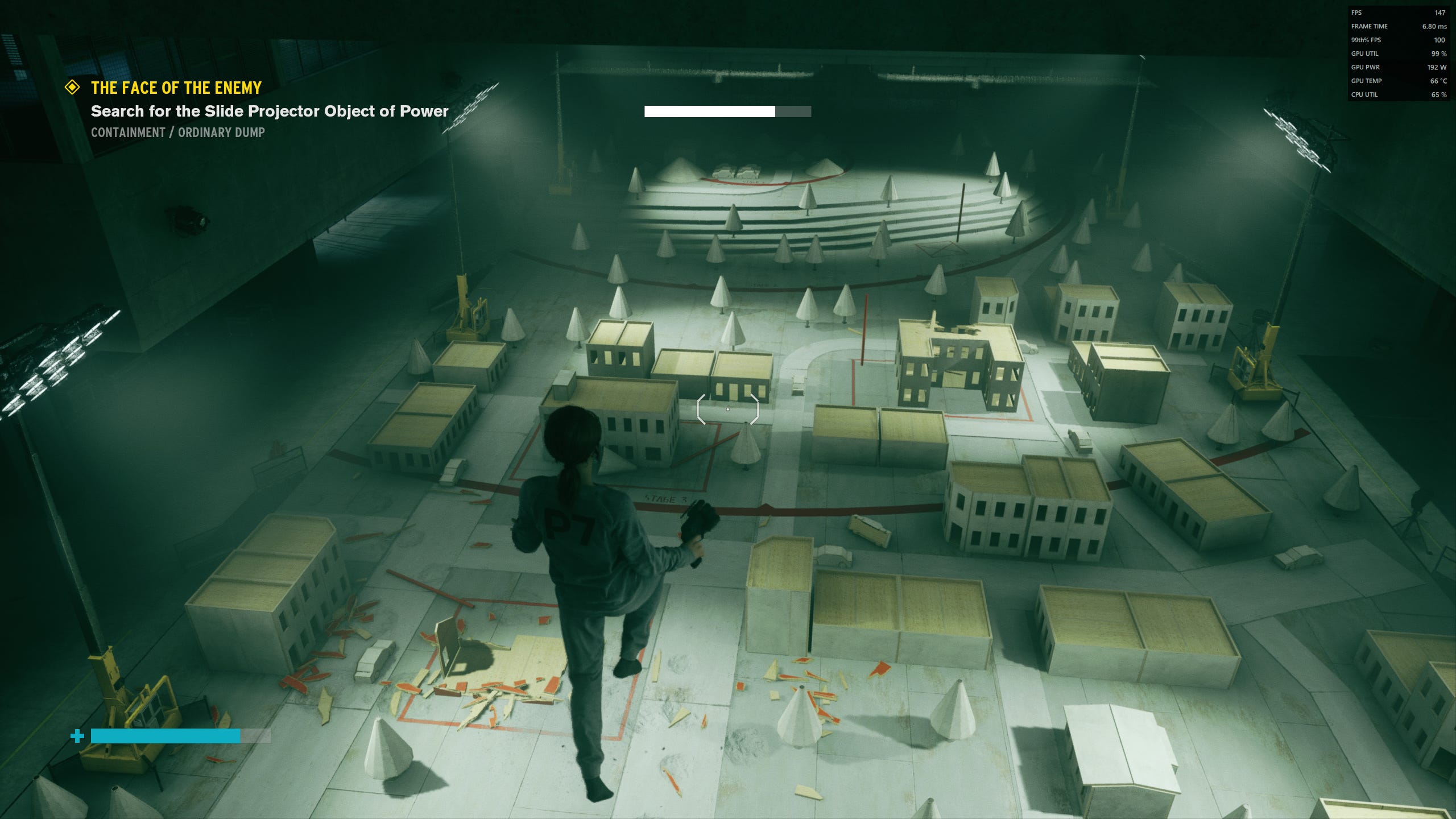
Control is an enjoyable, eerie experience. The game begins with the atmosphere inherent in the Oldest House, and impresses with level design and visual effects. The collectibles, especially the videos of Casper Darling and Threshold Kids contribute immensely to the characterization of the FBC. After Control establishes the setting, it adds solid, but not exceptional, combat. Gaining Levitation elevates battles, but combat still suffers from fighting similar enemies again and again. Unique boss battles reduce this problem, but they have too much health. Flying enemies are frustrating because they evade many attacks. Control's greatest weaknesses are the story and the inclusion of non-puzzle puzzles. The story displays such energy and promise at the beginning, but while it successfully builds suspense, its promises of future secrets and proper revelations never materializes. The finale offers only confusion and an unsatisfying cliff hanger. Jesse has contained the threat, but too many problems remain to call it a proper conclusion.
These conclusions are unsurprising. They mirror the atmosphere, combat, and story mechanics of the Alan Wake series. Yet, while less frightening, Control is the best game so far.
For now this ends Awkward Mixture's foray into the Remedy Extended Universe. Hopefully in 2025 we can return with Control expansions, or better yet, Alan Wake 2.